

Need a quick dinner that delivers plenty of flavor without requiring hours in the kitchen? These Korean Beef Rice Bowls combine savory ground beef, fluffy rice, fresh vegetables, and a sweet-and-savory sauce in one easy meal.
The beef cooks in a skillet while the rice and vegetables are prepared, making this recipe a practical choice for busy weeknights. Garlic, ginger, soy sauce, and a touch of sesame oil create a flavorful sauce that coats every bite of beef.
Serve the beef over warm white rice with crisp cucumber, shredded carrots, and sliced green onions. You can also customize each bowl with your favorite vegetables or add a little gochujang for extra heat.
The result is a satisfying Korean-inspired dinner that is easy to prepare, easy to customize, and perfect for anyone looking for a quick ground beef recipe.

Planning dinner every day can become difficult when you’re short on time and don’t know what to cook next. Having a collection of recipe ideas in one place can make meal planning feel more manageable. The 30 Easy Recipes Everyone Will Love eBook is a relevant option for readers who want to explore more approachable recipes. Keep it in mind when you’re ready to add more variety to your home cooking.
Why You’ll Love These Korean Beef Rice Bowls
Ready in about 25 minutes: This recipe uses simple ingredients and a quick skillet-cooking method.
Easy to customize: Change the vegetables, adjust the spice level, or substitute another ground meat.
Made with everyday ingredients: Soy sauce, garlic, ginger, rice, and ground beef create a flavorful meal without a complicated shopping list.
Great for meal prep: Prepare the beef and rice ahead of time, then assemble individual bowls when you’re ready to eat.
Balanced textures: Tender beef, fluffy rice, and crunchy vegetables make every bite more interesting.
Ingredients You’ll Need
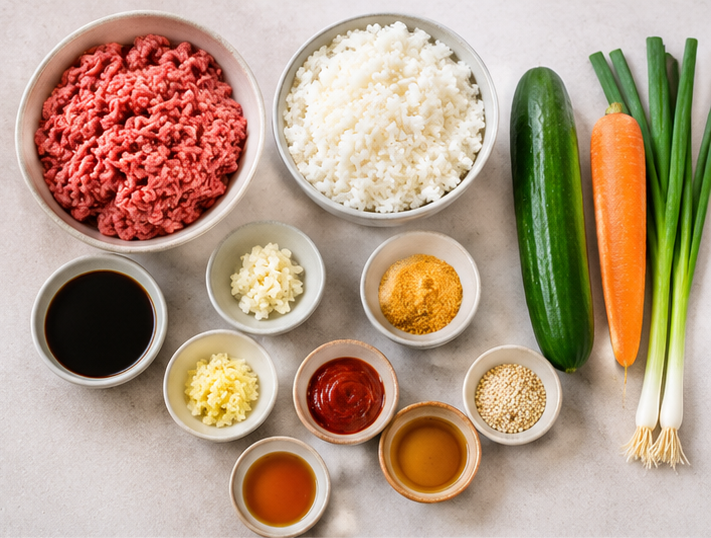
This recipe makes four servings.
For the Korean-Inspired Beef
- 1 pound lean ground beef (85%–90% lean)
- 1 tablespoon neutral cooking oil, such as canola or avocado oil
- 3 garlic cloves, minced
- 1 tablespoon freshly grated ginger
- 3 tablespoons low-sodium soy sauce
- 1 tablespoon brown sugar
- 1 tablespoon water
- 1–2 teaspoons gochujang (Korean chili paste), optional
- 1 teaspoon toasted sesame oil
- 1 teaspoon sesame seeds
- ¼ teaspoon black pepper
For the Rice Bowls
- 4 cups cooked white rice
- 1 medium cucumber, thinly sliced
- 1 medium carrot, peeled and shredded
- 2 green onions, thinly sliced
- Additional sesame seeds, for garnish
Ingredient Notes
Ground beef: Lean ground beef works well because it provides plenty of flavor without leaving too much excess grease in the skillet.
Soy sauce: Low-sodium soy sauce gives the beef a savory flavor while allowing you to control the saltiness.
Gochujang: This Korean fermented chili paste adds spicy, savory depth. It is optional, so you can leave it out for a milder bowl.
Fresh ginger and garlic: These ingredients add a fragrant flavor to the sauce. Fresh ingredients are ideal, but refrigerated minced garlic and ginger can save preparation time.
Rice: Jasmine rice, regular white rice, or brown rice can all work. Use leftover cooked rice or a quick-cooking option to keep the total preparation time short.
Vegetables: Cucumber and carrot add freshness and crunch. Shredded cabbage, steamed broccoli, or edamame are also good options.
How to Make Korean Beef Rice Bowls
Step 1: Prepare the Sauce
In a small bowl, whisk together the low-sodium soy sauce, brown sugar, water, minced garlic, grated ginger, gochujang if using, and black pepper.
Stir until the brown sugar begins to dissolve. Set the sauce aside while you cook the beef.
Step 2: Cook the Ground Beef
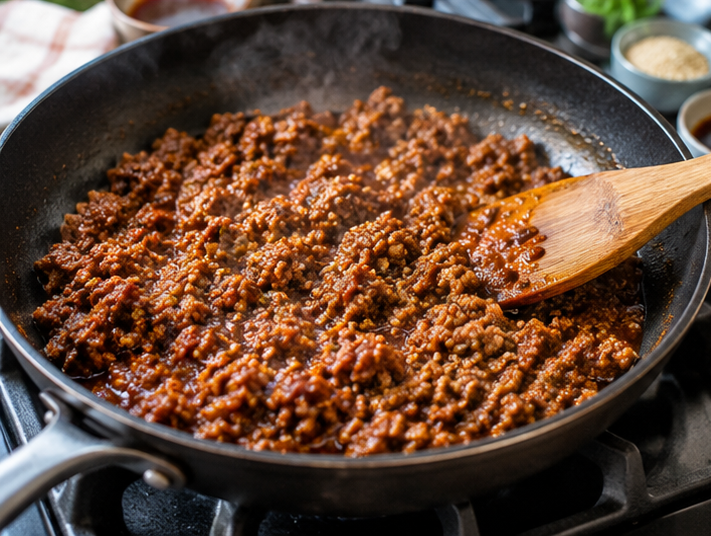
Heat the neutral cooking oil in a large skillet over medium-high heat.
Add the ground beef and break it into small pieces with a wooden spoon or spatula.
Cook for approximately 6–8 minutes, stirring occasionally, until the beef is browned and fully cooked. Use a food thermometer to verify that ground beef reaches an internal temperature of 160°F (71°C).
If there is a large amount of excess grease, carefully drain it before adding the sauce.
Step 3: Add the Sauce
Reduce the heat to medium.
Pour the prepared sauce over the cooked beef and stir well so that the meat is evenly coated.
Let the mixture simmer for 2–3 minutes, stirring occasionally, until the sauce thickens slightly and clings to the beef.
Remove the skillet from the heat and stir in the toasted sesame oil and sesame seeds.
Step 4: Prepare the Rice and Vegetables
While the beef cooks, prepare the rice according to the package directions if it isn’t already cooked.
Slice the cucumber, shred the carrot, and thinly slice the green onions.
Keep the vegetables separate until you’re ready to assemble the bowls. This helps the cucumber and carrot retain their fresh texture.
Step 5: Assemble the Bowls
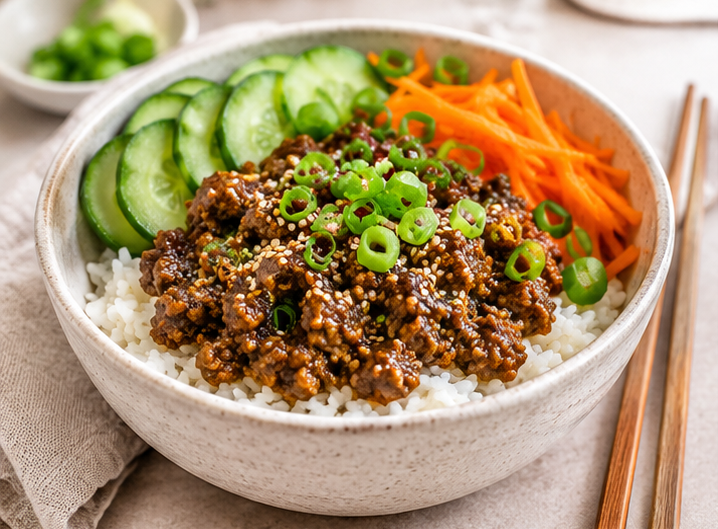
Divide the warm rice among four serving bowls.
Spoon the Korean-inspired ground beef over the rice.
Arrange the cucumber slices and shredded carrots around the beef. Finish with sliced green onions and additional sesame seeds.
Serve immediately while the beef and rice are warm.
Recipe Card
Tips for the Best Korean Beef Rice Bowls
| Recipe: Korean Beef Rice Bowls Cuisine: Korean-inspired Category: Dinner Prep Time: 10 minutes Cook Time: 15 minutes Total Time: 25 minutes Servings: 4 Cooking Method: Stovetop Ingredients 1 pound lean ground beef 1 tablespoon neutral cooking oil 3 garlic cloves, minced 1 tablespoon grated fresh ginger 3 tablespoons low-sodium soy sauce 1 tablespoon brown sugar 1 tablespoon water 1–2 teaspoons gochujang, optional 1 teaspoon toasted sesame oil 1 teaspoon sesame seeds ¼ teaspoon black pepper 4 cups cooked white rice 1 medium cucumber, sliced 1 medium carrot, shredded 2 green onions, sliced Instructions Combine the soy sauce, brown sugar, water, garlic, ginger, gochujang, and black pepper in a small bowl. Heat the cooking oil in a large skillet over medium-high heat. Add the ground beef and cook for 6–8 minutes, breaking it into small pieces until browned and cooked to 160°F. Pour the sauce over the beef and simmer for 2–3 minutes. Remove from the heat and stir in the sesame oil and sesame seeds. Divide the cooked rice among four bowls. Add the beef, cucumber, carrot, and green onions. Garnish with extra sesame seeds and serve warm. Recipe Notes: Adjust the gochujang to suit your preferred spice level. For a sweeter sauce, add a little more brown sugar. Use freshly cooked or properly refrigerated leftover rice. Refrigerate leftovers promptly in airtight containers. |
1. Let the Beef Brown
Avoid stirring the ground beef constantly. Allowing it to sit briefly against the hot skillet helps it develop a deeper browned flavor.
Break it into small pieces as it cooks so the sauce can coat the meat evenly.
2. Use Low-Sodium Soy Sauce
Regular soy sauce can make the finished dish quite salty, especially when combined with other savory ingredients.
Low-sodium soy sauce gives you more control over the final flavor.
3. Add Sesame Oil at the End
Stirring the sesame oil into the beef after removing the skillet from the heat helps preserve its distinctive toasted aroma.
4. Keep the Vegetables Fresh
Add the cucumber, carrots, and green onions just before serving. Their crisp texture contrasts nicely with the warm beef and rice.
5. Don’t Skip the Sauce
The sauce brings the ingredients together. If the beef mixture looks dry, add a tablespoon of water and stir until the sauce coats the meat evenly.
What to Serve With Korean Beef Rice Bowls
These bowls can be served as a complete meal, but a few extra sides can make dinner more varied.
- Steamed broccoli: Adds color and a tender vegetable side.
- Quick cucumber salad: Provides a cool, refreshing contrast to the savory beef.
- Edamame: Adds another easy vegetable option.
- Kimchi: Offers a tangy, fermented side for readers who enjoy its bold flavor.
- Miso soup: Makes a warm addition to an Asian-inspired dinner.
Choose one or two sides rather than preparing several dishes. The main advantage of this recipe is its simplicity.

Planning dinner every day can become difficult when you’re short on time and don’t know what to cook next. Having a collection of recipe ideas in one place can make meal planning feel more manageable. The 30 Easy Recipes Everyone Will Love eBook is a relevant option for readers who want to explore more approachable recipes. Keep it in mind when you’re ready to add more variety to your home cooking.
Frequently Asked Questions
Are Korean Beef Rice Bowls spicy?
They don’t have to be. Gochujang adds heat, but you can leave it out for a milder flavor. Add a small amount first if you’re unsure about your spice preference.
Can I make Korean Beef Rice Bowls without gochujang?
Yes. The recipe will still have a savory, slightly sweet flavor from the soy sauce, garlic, ginger, and brown sugar. The main difference is that the beef will have less heat and a different flavor profile.
Can I use leftover rice?
Yes. Properly refrigerated leftover rice works well in this recipe. Keep it refrigerated until needed and reheat it thoroughly. Do not use rice that has been left at room temperature for an extended period.
What kind of rice works best?
White rice, jasmine rice, and brown rice are all suitable. Jasmine rice has a fragrant aroma, while brown rice provides a nuttier flavor.
Can I use another type of ground meat?
Yes. Ground turkey, chicken, or pork can be used instead of beef. Follow the appropriate safe cooking temperatures for the meat you choose.
Can I freeze the cooked beef?
Yes. Allow the beef to cool, portion it into freezer-safe containers, and freeze it promptly. For best quality, use it within about 2–3 months. Thaw it safely in the refrigerator and reheat it to 165°F.
Are Korean Beef Rice Bowls good for meal prep?
Yes. The beef and rice can be portioned into separate meal-prep containers. Store fresh vegetables separately and add them when serving for the best texture.
How can I make this recipe less salty?
Choose low-sodium soy sauce, measure the sauce carefully, and avoid adding extra salt before tasting the finished beef. You can also add a little water to soften the intensity of the sauce.
Conclusion
These Korean Beef Rice Bowls are a practical way to turn ground beef, rice, and fresh vegetables into a flavorful dinner in about 25 minutes.
The savory garlic-ginger sauce, tender beef, and crisp vegetable toppings create a satisfying combination without requiring complicated cooking techniques.
You can keep the bowls mild, add gochujang for heat, or change the vegetables to use whatever you have available.
Save this recipe for a busy weeknight, and explore more quick and easy meal ideas on Quick Bites Kitchen.